
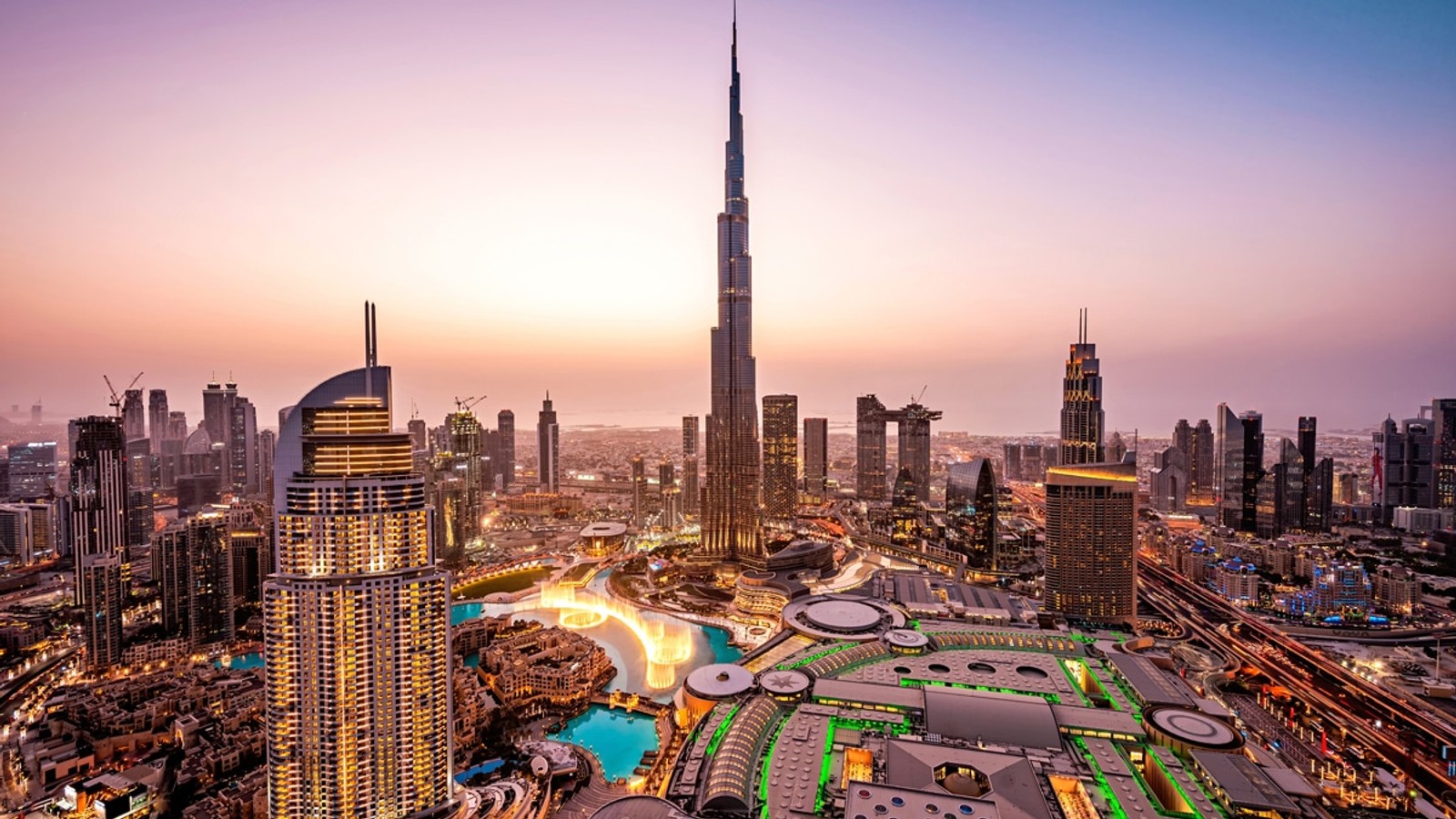
Dubai's real estate market demonstrates remarkable resilience, attracting global investors despite regional geopolitical uncertainty. New data from M R One Properties reveals a significant surge in sales and tenant inquiries, reinforcing the emirate's status as a preferred destination over traditional safe havens.
Why Global Capital Is Choosing Dubai Property Over London and Singapore Right Now
Regional conflict was supposed to push cautious capital toward traditional safe havens. Instead, Dubai posted its first monthly transaction increase since the conflict began, sovereign ratings agencies reaffirmed the UAE's standing mid-crisis, and off-plan sales — the clearest signal of long-horizon confidence — held at 76% of all deals.
Why This Matters
Geopolitical uncertainty usually sends capital toward the most conventional safe havens — and away from markets in the affected region entirely. Dubai's data runs the opposite direction. Sales enquiries and transaction volumes both turned up in April, not down, and three separate sovereign ratings agencies reaffirmed the UAE's creditworthiness in the middle of one of the region's more volatile stretches. Investors aren't behaving like people fleeing a market in distress — they're behaving like people repositioning within one they still trust.
Reading Resilience Against the Alternatives
Six angles on what's actually driving capital to stay, and increasingly to commit, to Dubai property.
A Pause, Not a Reversal, in the Data
April marked the first month-on-month transaction increase since the conflict began, with sales up nearly 2%. Combined with rising enquiries, the data reads as a market that briefly slowed rather than one that lost underlying demand.
Off-Plan Dominance Signals Long-Horizon Confidence
Committing capital to a project with a multi-year completion horizon, in the middle of regional uncertainty, is a meaningfully different decision than a quick opportunistic purchase — and 76% of deals were exactly that kind of commitment.
Ratings Agencies Didn't Blink
Fitch reaffirmed AA- with a stable outlook in May; S&P held AA stable; Moody's held Aa2 stable — all during one of the region's more volatile periods, each citing low government debt and strong fiscal buffers.
The Alternatives Aren't Getting Easier
London buyers face rising stamp duty and tightening landlord regulation. Singapore charges a 60% Additional Buyer's Stamp Duty on foreign purchasers. Dubai's comparatively lower transaction costs and absence of annual property tax look more attractive in relative, not just absolute, terms.
Policy Moved to Widen Access, Not Restrict It
Removing the Dh750,000 minimum property value threshold for investor visa eligibility broadened the buyer pool at exactly the moment sentiment needed reinforcing — a deliberate widening rather than a defensive tightening.
The Conversation Shifted From Exit to Timing
Market reports that investor questions have moved from concerns about exiting the market to questions about timing and positioning for the next phase — a change in tone that itself signals expectation of continued growth, not retreat.
Dubai vs. Two Traditional Safe Havens
What Investors Should Take From the Data
- Treat rising off-plan share as a confidence signal, not a red flag — 76% of deals reflects a willingness to commit to multi-year horizons during active regional uncertainty, which is a stronger vote of confidence than a ready-property purchase.
- Weigh Dubai's cost structure explicitly against alternatives: no annual property tax and comparatively lower transaction costs stack up favourably against London's rising stamp duty and Singapore's 60% foreign buyer surcharge.
- Watch sovereign ratings as a leading indicator — three independent reaffirmations mid-crisis is a stronger signal than any single market data point.
- Read tenant enquiry data (+40%) alongside sales data — a simultaneous rebound in both buying and renting interest points to broad-based demand recovery, not a narrow investor-only bounce.
The Next 12 to 24 Months
Without forecasting specific price movements, four factors will shape whether this resilience continues.
Infrastructure Commitments Continue Regardless
The $9 billion Gold Line Metro, planned to connect 15 districts by 2032, represents a long-term commitment that continues independent of near-term geopolitical developments — historically a supportive factor for property values along new corridors.
Track Record Through Prior Crises
Dubai's property market has previously absorbed the global financial crisis, the Covid-19 pandemic, and earlier periods of regional uncertainty — a repeated pattern that supports, but does not guarantee, similar resilience this time.
Supply Discipline Is the Key Variable
M R One Properties' own framing — "not seeing the supply response you'd expect from a market in distress" — implies that a shift toward oversupply or panic listings would be the clearest signal of a genuine deterioration, worth monitoring directly.
Regional Conflict Trajectory Remains the Wildcard
Current indicators are constructive, but the report itself acknowledges the trajectory of the regional conflict remains uncertain — a genuine escalation would be a materially different scenario than the current disciplined pause.
Markets are usually judged on how they perform in calm conditions. Dubai's property sector is currently being judged on how it performs in uncertain ones — and by the metrics that matter most to long-term capital, transaction volume, off-plan commitment, sovereign creditworthiness, it is holding up. Whether that continues depends less on Dubai's own fundamentals, which look intact, than on how the regional situation itself evolves from here.

About the author
Bodwin Tankeng
Wealth Advisor
A rising name in Dubai real estate, Bodwin Tankeng brings fresh energy, ambition, and a client-first approach, already earning recognition from Emaar and DAMAC in a short span of time.
About the author
Bodwin Tankeng
·Wealth AdvisorA rising name in Dubai real estate, Bodwin Tankeng brings fresh energy, ambition, and a client-first approach, already earning recognition from Emaar and DAMAC in a short span of time.


