
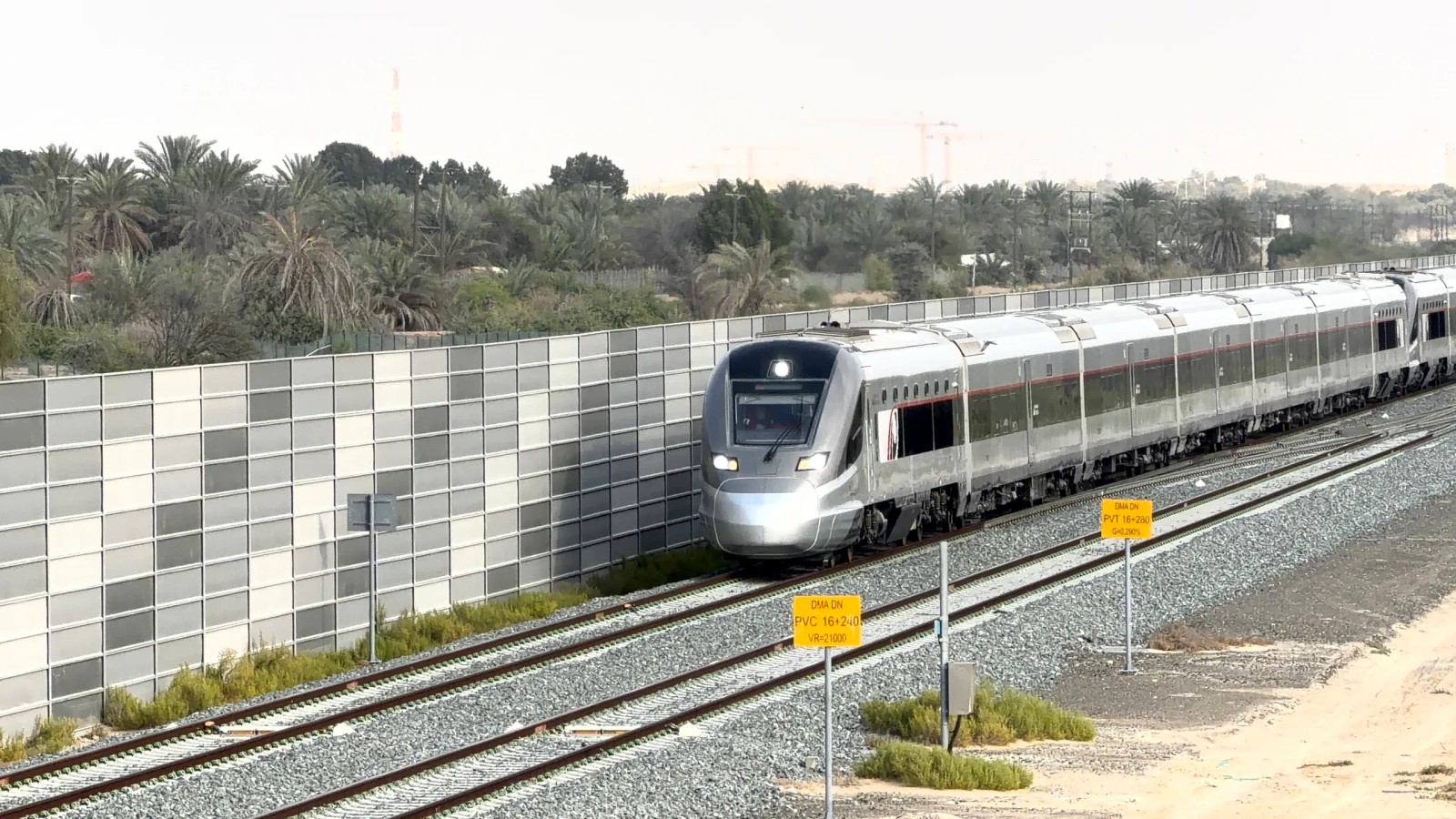
Etihad Rail's nascent passenger service is already reshaping Dubai's property landscape, with investors repositioning ahead of the city's station opening. This analysis explores how infrastructure-led growth and anticipatory pricing are redrawing the emirate's real estate map, drawing parallels with historical market shifts.
Dubai's Property Map Is Being Redrawn by a Railway That Hasn't Reached the City Yet
Etihad Rail's first passenger service went live between Abu Dhabi and Fujairah on June 30, with ticket sales open from July 1. Dubai's own station does not open until September. Investors are repositioning anyway — and the reasons say more about how Dubai prices land than about the trains themselves.
Why This Matters
The story here is not the train. It is the six-week gap between a confirmed launch and a confirmed effect. Dubai's real estate market has priced in infrastructure before it physically arrived at least twice before — around the Metro's 2009 debut and along Sheikh Zayed Road's arterial upgrades — and both times, land near future stations moved before the stations did. Etihad Rail is the same pattern at national scale: a 900-kilometre network stitching seven emirates together, with Dubai as the intended hub. For investors, the relevant question this July is not whether to ride the train. It is which corridors are already being repriced around where the next stop will be.
Reading the Rollout Through an Investment Lens
Six distinct forces are shaping how this launch translates into property market behaviour over the next 18 months.
The Metro Playbook, Applied Nationally
When the Dubai Metro's Red Line opened in 2009, properties within walking distance of stations recorded sustained double-digit value gains in the years that followed, a pattern investors now treat as a leading indicator rather than background noise. Etihad Rail follows the same accessibility-to-value mechanism, but the catchment is no longer one city — it is a corridor running from Fujairah through Sharjah and Dubai to Abu Dhabi.
A Window That Closes on Its Own Schedule
Firas Al Msaddi, CEO of fäm Properties, has described the launch as marking "a new real estate era in the UAE," arguing that cutting intercity travel time reshapes where people choose to live and work well before construction near a given station is finished. Historically, early positioning ahead of a confirmed opening date has captured more upside than buying after a station is already operating and demand has caught up.
Infrastructure-Led Growth, Not Reactive Development
Etihad Rail sits inside a broader UAE pattern of sequencing infrastructure ahead of demand — building capacity first, then letting residential and commercial development follow the access it creates. That sequencing is deliberate: it lets underused land along the route absorb growth instead of concentrating all new supply inside already dense city centres.
Accessibility Is Becoming a Pricing Variable
Distance to a station is starting to function the way distance to a metro line already does in Dubai: a measurable input into value, not a lifestyle preference. For end users, that means commuting calculus changes. For investors, it means travel-time analytics are becoming as relevant to underwriting a purchase as a masterplan or a floor count.
Unlocking Land That Was Previously Too Remote
Areas once considered peripheral to Dubai's core investment zones become viable once a rail connection cuts the effective travel time to a business hub. That shift widens the developable footprint of the emirate without adding density to already-constrained districts, a release valve for supply that pure infill construction cannot replicate.
The Rollout Is Phased for a Reason
Only one of four planned phases is currently operating. Land near stations tends to cost more to develop, competition for well-located plots intensifies as timelines firm up, and construction schedules on infrastructure projects of this scale can shift. The 15–25% historical range from the Metro era is a pattern, not a guarantee, and it played out over years, not months.
Network Completion Status
Infrastructure-to-Value Precedent
What Investors Should Watch
- Treat confirmed station locations, not general proximity to the route, as the underwriting variable — walkable distance has historically mattered more than being "near" a line.
- Watch for the September 30 Dubai station opening as the next real catalyst; anticipatory pricing tends to firm up as a confirmed date gets closer.
- Weight quality and management alongside location. Not every building near a station benefits equally — construction standard and long-term maintenance still drive performance.
- Expect land and construction costs near confirmed stations to rise as timelines solidify and competition for well-located plots increases.
- Read this alongside the emirate's broader e-invoicing and regulatory shifts this quarter — commercial real estate operators near new hubs face the same July 1 compliance deadline as any other business.
The Next Two to Five Years
Without forecasting specific price movements, several structural shifts are already in motion.
Transit-Oriented Development Takes Shape
As each phase opens, expect a wave of mixed-use planning around confirmed stations — walkable retail, offices and residential density clustered where car-dependent development once dominated. This mirrors the pattern seen around Dubai Metro stations over the past decade.
A National, Not Just Local, Demand Pool
Because the network links seven emirates rather than serving one city, investors are increasingly evaluating land value on a corridor basis — factoring in commuting range to Dubai and Abu Dhabi rather than treating each emirate's market in isolation.
Execution Timing Remains the Key Variable
Large infrastructure rollouts can shift by months even when early phases perform well. The gap between anticipatory pricing and delivered value narrows only as each remaining phase — Al Dhafra in December, Sharjah in March — is confirmed on schedule.
Second-Home and Weekend Markets Expand
Faster intercity travel makes previously inconvenient locations — coastal Fujairah, inland Al Dhaid — realistic for weekend or second-home ownership by Dubai-based buyers, a category of demand that barely existed on this corridor before.
Etihad Rail's opening weekend sold out because people wanted to ride a new train. Its longer-term significance for Dubai's property market has little to do with that novelty. What matters is the accessibility it delivers to land that was previously priced as remote — and how quickly the market moves to reflect that before the physical stations are even finished. Dubai has repriced around infrastructure before it arrived twice in the past two decades. With the Dubai station three months out and the full seven-emirate network due by March 2027, the current phase is less about the ride and more about which corridors get repriced first.

About the author
Sahar Kamal
Associate Director
One of the UAE’s most experienced and trusted real estate professionals, Sahar Kamal brings over 20 years of deep market expertise, a remarkable track record of closing more than $1.5 billion in property transactions, and multiple awards from some of the region’s leading developers.
About the author
Sahar Kamal
·Associate DirectorOne of the UAE’s most experienced and trusted real estate professionals, Sahar Kamal brings over 20 years of deep market expertise, a remarkable track record of closing more than $1.5 billion in property transactions, and multiple awards from some of the region’s leading developers.


