
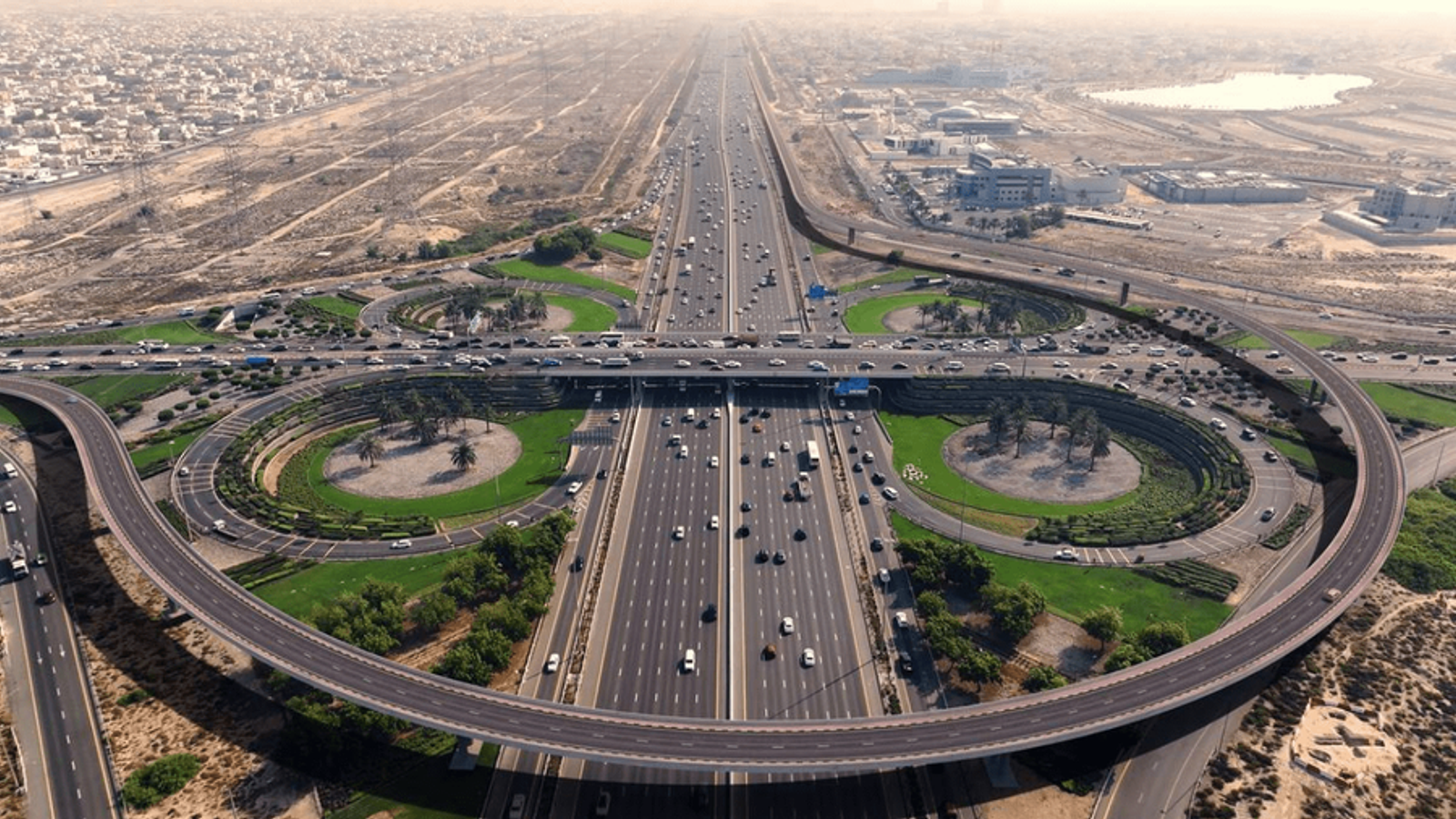
Dubai is set to significantly reduce travel time on Sheikh Zayed Road with the new First Al Khail Street Development Plan, featuring a 15-kilometre elevated roadway. This major infrastructure project is part of a broader Dh18-billion package of strategic initiatives, including cultural, economic, and educational reforms, designed to enhance the emirate's urban landscape and global competitiveness.
A New Elevated Corridor Is About to Cut Sheikh Zayed Road Travel Time in Half, Here's Who Benefits
Sheikh Hamdan has approved the First Al Khail Street Development Plan: a 15-kilometre elevated roadway expected to cut peak-hour travel time on Sheikh Zayed Road by 51% and add capacity for 9,000 more vehicles an hour. It directly serves Al Barsha, Al Quoz, Business Bay and Meydan, four of Dubai's most active property corridors.
Why This Matters
Sheikh Zayed Road is the backbone connecting Dubai's most valuable commercial and residential corridors, and its congestion has long been priced into how desirable, or difficult, nearby communities feel to live in. A 51% cut in peak travel time is not a marginal improvement; it materially changes the practical commute calculus for four major districts at once. Combined with a population that grew by 332,000 people in 2025 alone, this reads less like a standalone road project and more like infrastructure catching up to demand that has already arrived.
The Commute Case for the New Corridor
Communities the Corridor Serves
These four districts sit directly on the new corridor's route, spanning some of Dubai's most active residential and commercial markets.
Reading a Road Project as a Property Signal
Congestion Relief Is a Quiet but Real Value Driver
Commute time is one of the most consistent, if under-discussed, factors in residential desirability. A district that becomes materially faster to reach from the wider city typically sees renewed buyer and tenant interest, independent of any other market catalyst.
Capacity Is Being Built Ahead of Population Growth
Approving this corridor in the same session as the Dubai Population Now initiative, built specifically to track the city's 7.5% annual population growth, signals a deliberate attempt to keep infrastructure capacity ahead of demand, not reactive to it.
Four Established Corridors Get a Simultaneous Upgrade
Al Barsha, Al Quoz, Business Bay and Meydan are already active, established markets rather than emerging ones, this project adds a connectivity upgrade to areas with existing liquidity and track records, a lower-risk profile than speculative infrastructure bets on unproven locations.
The Benefit Is Years Away, Not Immediate
Construction doesn't begin until Q3 2027 and isn't due to complete until Q4 2030, over four years out. Any repricing tied to this announcement is anticipatory, not a reflection of a change that has actually taken effect yet.
Part of an Dh18 Billion Day, Not an Isolated Announcement
The same Executive Council session approved the Dubai Investor Register, targeting Dh650 billion in foreign direct investment by 2033, alongside cultural and customs strategies, suggesting infrastructure, investment policy and city branding are being sequenced together.
Large Infrastructure Timelines Can Shift
A more-than-three-year gap between approval and construction start, followed by a further three-year build, leaves meaningful room for scheduling changes, a pattern worth watching rather than assuming as fixed.
What Buyers and Investors Should Watch
- Track construction milestones from 2027 onward as the more reliable signal of value impact, announcement-stage anticipation is a weaker indicator than a confirmed, on-schedule build.
- Focus on Al Barsha, Al Quoz, Business Bay and Meydan specifically, since these are the districts with direct corridor access rather than general Dubai-wide exposure.
- Weigh this alongside Dubai's confirmed population growth (+332,000 in 2025) as independent evidence of real, not speculative, demand for added road capacity.
- Treat the multi-year timeline as a long-horizon consideration for off-plan or buy-and-hold strategies, not a near-term catalyst for immediate resale.
The Next Four Years
Without forecasting specific price movements, a few factors will shape how this plays out.
Anticipatory Interest Likely Builds Gradually
Historically, Dubai infrastructure announcements generate early interest that firms up as construction milestones are confirmed, expect gradual, not immediate, market repositioning around the four connected districts.
Population Growth Is the Real Demand Driver to Track
If Dubai's population continues expanding near its recent 7.5% annual pace, the case for this corridor's necessity, and its longer-term value impact, strengthens independent of the infrastructure announcement itself.
Construction Start in 2027 Is the Next Checkpoint
Confirmation that construction begins on schedule in Q3 2027 would be the clearest signal the project remains on its stated timeline, worth monitoring specifically as that date approaches.
Sequenced With Broader Investment Policy
With the Dubai Investor Register targeting Dh650 billion in FDI by 2033 approved the same day, expect continued pairing of physical infrastructure with investment-facilitation policy over the coming years.
Road infrastructure rarely makes for dramatic news, but a confirmed 51% cut in peak-hour travel time along Dubai's busiest artery is the kind of change that quietly reshapes how four established districts are valued over time. The project won't move markets tomorrow, construction doesn't even begin until 2027. But paired with a population that grew by a third of a million people last year alone, it's a clear signal about where Dubai expects its connectivity pressure points to be, years before most buyers will feel the difference on their commute.

About the author
Rahul Bishen
Associate Director
One of the UAE’s most sought-after senior realtors, Rahul Bishen brings 15 years of market experience, deep investor insight, and a powerful track record shaped through every phase of the market with repeated recognition from Emaar, DAMAC, and other leading developers.
About the author
Rahul Bishen
·Associate DirectorOne of the UAE’s most sought-after senior realtors, Rahul Bishen brings 15 years of market experience, deep investor insight, and a powerful track record shaped through every phase of the market with repeated recognition from Emaar, DAMAC, and other leading developers.


