
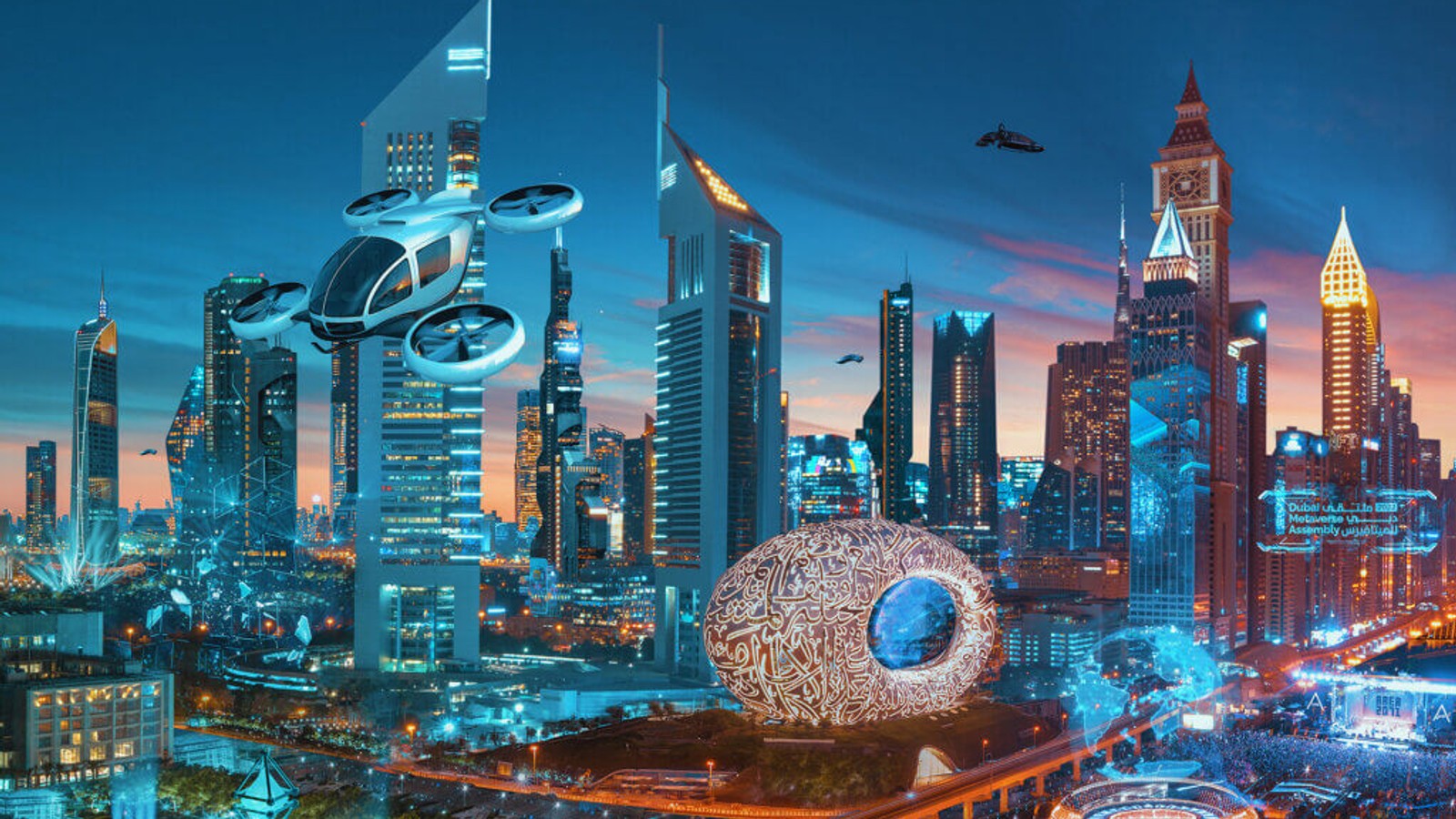
The UAE is embarking on an ambitious transformation of its transportation landscape, with Dubai and Abu Dhabi leading multi-billion dirham projects to alleviate congestion and enhance connectivity. This comprehensive overview details upcoming aerial taxis, driverless systems, new highways, and extensive metro expansions, all poised to fundamentally reshape daily commutes and solidify the nation's status as a future-ready hub.
The UAE Is Running More Than a Dozen Transit Projects at Once — Here's the Real Estate Map Behind Them
Traffic delays hit 45 hours per driver in 2025, up from 35 the year before, as the UAE's population and vehicle count keep climbing. The response isn't a single headline project — it's a simultaneous, multi-billion-dirham pipeline spanning metro lines, highways, underground tunnels and aerial taxis. One detail stands out for property watchers: Dubai's new Metro Gold Line names 55 specific developments it will directly connect.
Why This Matters
Individually, any one of these projects would be a significant real estate story — a metro extension here, a highway widening there. Seen together, they describe something bigger: a coordinated attempt to keep infrastructure capacity ahead of a population that added 390,000 vehicles to UAE roads in a single year. For property watchers, the most useful move is not to track all dozen-plus projects equally, but to identify which specific ones name specific communities — because those are the connections that translate most directly into value.
Three Categories, One Coordinated Push
Grouped by type rather than announcement order, here's what's actually in motion and which communities each touches most directly.
Rail & Metro
The most explicit real-estate connection of the entire portfolio — 15 areas, serving roughly 1.5 million residents by 2032.
Links Green and Red lines, adding stations serving Dubai Creek Harbour, International City, Silicon Oasis, Academic City, Mirdif and Al Warqa.
Underground high-speed network; first stations at Burj Khalifa, DIFC 2, Zabeel Dubai Mall and ICD Brookfield Place.
Six stations including Reem Island, Yas Island and Saadiyat Island — three of the UAE's largest master-planned communities.
Already covered in a previous briefing — 900km connecting all seven emirates, Abu Dhabi to Dubai in 57 minutes.
Roads & Highways
120km, 12 lanes — joins the E11, E311 and E611 as the UAE's fourth pan-emirate route.
Expanding to 10 lanes; construction already underway, Dh750 million, roughly two years to completion.
Widening to 10 lanes to improve traffic flow along one of the country's busiest arteries.
Already covered in a previous briefing — new corridor serving Al Barsha, Al Quoz, Business Bay and Meydan.
Emerging Mobility
Four initial vertiports near Dubai International Airport, Zabeel Dubai Mall, Atlantis The Royal and Dubai Marina.
Bluewater Island, Umm Suqeim, Al Quoz and Dubai Festival City — designed as last-mile links to metro stations.
First fully driverless commercial robotaxi service in the Middle East, expanding to Al Reem and Al Maryah.
Pedestrian walkway network across 160 areas, including the elevated, climate-controlled Future Loop near DIFC.
Reading the Portfolio as a Whole
The Gold Line Is the Standout Real Estate Signal
Most infrastructure announcements imply a connection to nearby property. The Gold Line's documentation explicitly names 55 developments — a level of direct specificity that removes the guesswork usually involved in linking transit to value.
Island Communities Get a Second Access Route
Yas Island, Saadiyat Island and Reem Island — already established, high-value residential and leisure destinations — each gain a station on the new high-speed rail line, adding a second fast connection to Dubai alongside existing road access.
Simultaneous, Not Sequential, Investment
Running rail, road and emerging mobility projects concurrently, rather than one at a time, signals confidence in sustained demand and a deliberate strategy to avoid infrastructure becoming the constraint on growth.
Today's Off-Plan Buyer Is Tomorrow's Completed-Network Owner
With most major rail projects completing between 2029 and 2032, buyers purchasing off-plan today are positioned to take possession into a materially more connected city than the one they're buying into now.
Air Taxis and Pods Are Early-Stage, Not Yet Proven at Scale
Four vertiports and four pod zones are pilot-scale deployments. They're worth watching as potential premium differentiators for specific buildings, but shouldn't be weighted as heavily as the rail and road projects with confirmed multi-year construction budgets.
A Pipeline This Large Carries Scheduling Risk
Coordinating a dozen-plus major projects across multiple emirates and agencies is a genuinely complex undertaking — individual project delays are more likely across a portfolio this size than they would be for any single announcement in isolation.
How to Use This Portfolio View
- Prioritise the Gold Line's named 55 developments as the most directly documented connectivity-to-property link in this entire pipeline — a rare case where the connection is stated, not inferred.
- Weight rail and road projects with confirmed budgets and construction timelines more heavily than emerging mobility pilots when advising on medium-term positioning.
- Cross-reference any specific community against multiple projects — Business Bay and DIFC, for instance, benefit from both metro expansion and the Dubai Loop simultaneously, a stronger case than single-project exposure.
- Track completion dates carefully: most rail projects land in the 2029–2032 window, meaning current impact is anticipatory, while road widening projects like Emirates Road complete much sooner, around 2027–2028.
The Next Three to Six Years
Without forecasting specific price movements, a few patterns are worth tracking as this portfolio matures.
Near-Term Wins Come From Road Projects
Emirates Road and similar widening projects complete on a two-year horizon — the first tangible congestion relief from this entire pipeline is likely to arrive well before any of the rail projects are finished.
2029 Is the First Major Rail Checkpoint
The Blue Line's 2029 completion will be the first real test of whether the broader rail expansion delivers on schedule, ahead of the Gold Line's 2032 target.
New Mobility Scales Slowly by Design
Air taxis and driverless pods are launching in narrow, controlled zones — expect gradual expansion tied to safety validation rather than rapid citywide rollout in the near term.
Population Growth Remains the Variable to Watch
Whether this infrastructure wave keeps pace with demand depends heavily on whether population and vehicle growth continues at its recent rate — a faster-growing city could still outpace even this scale of investment.
No single line in this portfolio explains the scale of what's happening in UAE transport right now. It's the combination — metro lines racing to open by 2029 and 2032, highways widening years sooner, and entirely new modes of travel piloting in parallel — that signals genuine confidence in sustained population and property growth. For anyone tracking real estate specifically, the Gold Line's 55 named developments are the clearest single data point in the entire pipeline. Everything else on this list is context for why that number exists in the first place.

About the author
Sheraz Khan
Associate Partner
Sheraz Khan stands among the leading real estate professionals in the UAE, known for his strong market insight, trusted client relationships, and proven results. Repeatedly recognized by Emaar and DAMAC at their annual awards, he has built a reputation for excellence at the highest level of the industry.
About the author
Sheraz Khan
·Associate PartnerSheraz Khan stands among the leading real estate professionals in the UAE, known for his strong market insight, trusted client relationships, and proven results. Repeatedly recognized by Emaar and DAMAC at their annual awards, he has built a reputation for excellence at the highest level of the industry.


